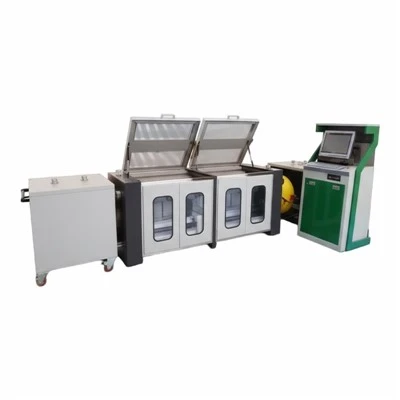
Biochemical Incubation Equipment Hey there, I’m Jake, and let’s cut to the chase: if you work in construction, you know that a project isn’t just about nailing things together or pouring concrete—it’s about making sure every material goes into that build with zero guesswork. Back when I started in this game (way back in like 2012, after my old man dragged me to a job site where a test lab was still using pen and paper), we’d wait weeks for lab results, cross our fingers that a batch of asphalt wouldn’t crack, and pray the steel beams we bought actually met code. Fast forward to now? The modern construction material testing equipment I sell isn’t just a hunk of metal that takes a sample—it’s got brains, and they’re game-changers. Let me walk you through the real, no-BS functionalities you’ll actually use, not just some sales fluff. First up: Real-time, on-site data logging and syncing. Back in the day, you’d test a concrete cylinder in the lab, write down the compressive strength on a scrap of notebook, maybe a typo would make you reject a whole batch for no reason, and then you’d spend hours typing it into a spreadsheet back at the office. Now? My gear has a built-in tablet or app (we use Bluetooth 5.0, no sketchy Wi-Fi drops on remote job sites) that logs every single data point while the test runs. Like, if you’re doing a flexural test on concrete beams, it’s measuring load and deflection in milliseconds, not every second, so you get a perfect curve, not a blurry line. And it auto-syncs straight to cloud storage—no more chasing after a intern who lost your sample log. You can share it with the engineer mid-test, or send a copy to the city inspector before they even finish their coffee. I’ve had a guy on a highway project in Texas who caught a bad batch of asphalt right on-site, instead of waiting 10 days for lab results, and they dumped it before paving 2 miles of road. That’s money saved, right there. Next: Automated code compliance checklists. Let’s be real, reading ASTM or AASHTO codes is like trying to decode ancient hieroglyphs for new guys. My equipment’s preloaded with all the latest codes—from 2023 ACI concrete specs to EU steel standards—so when you run a test, it doesn’t just spit out a number, it tells you if that number meets code as you go. If a concrete cylinder’s compressive strength is 2000 psi, but the code requires 2500 psi for this structural slab, the screen turns red and beeps—not after you’ve run three tests and wasted material. No more second-guessing, no more staying up till 2 AM cross-referencing numbers. I even had a small contractor in Ohio tell me this cut their inspection delays by 70% last year, because inspectors trusted the pre-loaded code set, no debates. Now, here’s the one that makes older test techs roll their eyes: Adaptive test control and customization. See, not every sample is the same. Some guys test 6-inch concrete cylinders, some test 12-inch beams, some do weird custom mixes for high-rise projects. Old gear runs the same test at the same speed, no matter what. My equipment? It adjusts on the fly. You can set the test rate for asphalt to be slow and steady for hot weather, or cranked up a bit for cold climates. You can save a custom test profile for your go-to mix, so next time you test that same batch, you don’t have to punch in 10 settings. And if you’re testing something weird, like recycled steel or cross-laminated timber (CLT) that’s blowing up right now, you can build a custom test in the app, save it, and use it forever. We just worked with a firm building a zero-energy mall out of CLT—they needed tests that old gear couldn’t run, so we customized the control to measure both tensile and shear at the same time, instead of two separate tests. Saved them two days of lab time. Another big one: Non-destructive testing (NDT) integration and data fusion. Let’s face it—sometimes you can’t just hack a core out of a wall or a bridge to test it, that’s costly and delays the project. Modern NDT gear pairs with my testing equipment: ultrasonic pulse velocity tests, ground-penetrating radar, even rebound hammer tests. All that data gets pulled into the same dashboard, so you’re not looking at three different apps or sheets. You can see, for example, that a concrete wall has a low ultrasonic reading and a rebound hammer score that’s off, so you know there’s a void, not just a weak sample. Last month, a bridge crew used this to spot a hidden void under a support beam, fixed it before it became a safety hazard, and saved $100k in repairs way down the line. No more guesswork—you’ve got a full picture of the material’s health, not just one test. Wait, don’t sleep on IoT and remote monitoring. I know, IoT sounds like buzzword garbage, but hear me out. If you’re running a lab that’s testing 50 samples a day, you don’t need a guy hovering over the machine 24/7. My equipment can send alerts if a test is stuck, if a sensor is off, or if a batch is out of spec. Last winter, a lab in Minnesota had a temperature sensor go bad on a concrete curing chamber— the equipment sent an alert to their phone at 2 AM, so they fixed it before the samples cured wrong. They didn’t lose $5k worth of test samples, that’s a win. And for smaller contractors who don’t have a full-time lab? You can log into the same system from your phone when you’re at a supply yard, and make sure the cement truck’s batch is good before you pour. Now, I’m not gonna pretend this stuff is perfect. You still gotta check samples for cracks, you still need a trained eye, but the automation takes the boring, error-prone stuff out. Let’s talk about why this matters for you, not just me selling gear. I’ve seen too many construction projects derail because of bad material testing—delays, fines, even safety issues. My job isn’t just to sell a machine; it’s to make your life easier, so you don’t have to stress about test results when you’re stressing about deadlines and budgets. If you’re still using that 15-year-old test press that requires two guys to crank a lever and write every number by hand, you’re wasting time and money. I’ve had customers swap out old gear and cut their testing time by 60% and reduce test errors by 80% in the first month. Look, I get it—new tech can feel overwhelming. But all the functionalities I talked about are built to be user-friendly. The app’s got big buttons, step-by-step prompts, and we offer free training for 30 days after delivery, no fine print. If you’re tired of waiting weeks for lab results, or wasting material on bad batches, or arguing with inspectors over test data, we can hook you up. We work with everyone from small residential contractors to big highway firms, so we’ve got gear that fits your budget, not just the big fancy stuff. If you’re ready to stop guessing and start testing smart, reach out to us. We can walk you through exactly what your project needs, no sales pitches, no pressure—just honest advice. Let’s wrap this up: modern construction material testing equipment isn’t just about doing the same old tests faster. It’s about syncing data, following code, adapting to your samples, integrating non-destructive tools, and keeping you in the loop remotely. All of that adds up to less stress, fewer delays, and safer projects. Now if you’re looking to upgrade your testing setup, let’s chat. No B.S., just solutions that work for your build. References: 1. American Concrete Institute (ACI). (2023). Building Code Requirements for Structural Concrete (ACI 318-19). 2. American Association of State Highway and Transportation Officials (AASHTO). (2024). Standard Methods of Test for Materials and Elements of Transportation Systems. 3. International Organization for Standardization (ISO). (2022). ISO 10141: Non-destructive testing of construction materials – Ultrasonic testing for concrete. 4. National Ready Mixed Concrete Association (NRMCA). (2023). Field Testing and Quality Control Guide for Ready Mixed Concrete. Construction Material Testing Equipment
Hebei Wanluda Testing Instrument Equipment Co., Ltd.
As one of the most professional construction material testing equipment manufacturers and suppliers in China, we have world-leading production equipment and strong manufacturing capabilities. Please rest assured to buy advanced construction material testing equipment made in China here from our factory.
Address: Zhouguantun Village, Xian County, Cangzhou City, Hebei Province, P.R.China
E-mail: wldinstrument@163.com
WebSite: https://www.wldinstrument.com/
