Hey everyone, let’s cut to the chase – as a FTTA supplier that’s spent years deep in the aviation game, I’ve seen first-hand just how game-changing fiber-to-the-aircraft (FTTA) tech can be. I’m talking about the stuff that replaces those clunky, old copper cables that used to drag behind maintenance tugs, slow down in-flight Wi-Fi, and drive ground crew absolutely nuts. But here’s the thing: for all its hype, rolling out FTTA in aviation isn’t exactly a walk in the park. We’ve spent so much time troubleshooting headaches that I figured I’d pull back the curtain on the real challenges we face day-to-day – no corporate fluff, just the stuff that actually keeps us up at night. FTTA

First off, let’s get one thing straight: aviation is a sector that operates on non-negotiables. Safety? It’s not a priority, it’s the law. Every single part, every cable, every tech tweak has to pass the strictest FAA (Federal Aviation Administration) and EASA (European Union Aviation Safety Agency) checks. And FTTA? That’s not just your average office fiber run. When you’re running fiber all over an aircraft – through cramped fuselage walls, near avionics bays that hum with high-voltage gear, in areas that get blasted with temperature swings from -55°C at cruising altitude to 70°C on the tarmac in Dubai – the fiber cable’s got to handle way more than just bending. Standard office fiber can snap if bent too tight, but aviation-grade fiber has to bend without losing signal even when it’s routed around things like hydraulic lines, fire suppression systems, and those giant metal frames that keep the plane together. We’ve had to develop custom cables with special aramid reinforcement and low-attenuation jackets just to meet those specs – and even then, the cert process takes months. Last year, we waited 10 weeks for a single test batch to get EASA approval, and that was after three failed attempts because a tiny 0.5mm bend radius didn’t check out. The regulator doesn’t care if your tech works in a lab – they care if it won’t fail mid-flight and put 200 people at risk. That’s not just a hurdle; that’s a speed bump that can sink a project before it even gets off the ground.
Then there’s the weight problem. Airlines live and breathe by every single pound they can shave off a plane. More weight means more fuel burn, means more costs, means less profit. Copper cables have gotten lighter over the years, but fiber is already way thinner and lighter – right? Well, not so fast when you factor in all the extra hardware. To run FTTA, you don’t just pull a fiber line through a hole. You need connectors that are rugged enough to handle being plugged and unplugged hundreds of times during maintenance, plus sealants to keep moisture out (aviation hates moisture – it’s a one-way ticket to corrosion), and mounting brackets that don’t add too much heft. We had a client test our first FTTA kit a couple months back, and their maintenance team flagged that the connectors alone added 2.3 lbs per aircraft. For a single narrow-body jet, that’s 30 extra pounds – which adds up to hundreds of gallons of extra fuel a year. Airlines aren’t going to go for that. They’re already running on razor-thin margins, so we’ve had to reengineer connectors to use high-strength, lightweight materials like carbon-fiber composites, and we’re still not at the magic number yet. Every pound counts, and if our FTTA setup adds even a tiny bit of weight that eats into their bottom line, they’re walking away.
Next up, signal reliability in the chaotic environment of an aircraft. In an office, fiber runs straight, it’s protected from rough handling, and signal strength is pretty consistent. On a plane? You’ve got constant vibration from engines, turbulence that jostles everything, even the pressure changes when you climb or descend. Those vibrations aren’t just the gentle shake you feel as a passenger – we’re talking about forces that can wiggle a connector loose or cause micro-bends in the fiber that kill signal. Last quarter, a regional airline customer called us in a panic because their new FTTA setup was dropping Wi-Fi mid-turbulence. We traced it back to the connectors – they were held in place with basic plastic clips that vibrated loose after 50 takeoffs and landings. We swapped in locking metal clips, but that added a little more weight, which brings us back to the weight problem. It’s a vicious cycle. We need hardware that’s rugged enough to handle the vibration, but not so heavy that it makes the plane’s fuel costs skyrocket. And don’t even get me started on signal interference from avionics. Those radar systems, navigation gear, and communication radios pump out so much electromagnetic interference (EMI) that a standard fiber cable might be immune, but if you run it too close to those lines during installation, it can cause signal degradation. Installers have to map every inch of the aircraft’s avionics layout before they even pull a fiber run, which adds hours to each plane’s maintenance time. For airlines that turn planes around in 30 minutes between routes, that extra time is a non-starter.
Training and adoption is another big one. The maintenance crews that work on airplanes have spent decades working with copper cables – they know exactly how to strip them, crimp connectors, troubleshoot a break, all without looking at a manual. FTTA is a whole new ballgame. Fiber is way more delicate than copper; one wrong move with a fiber stripper, and you’ve got a broken strand that’s impossible to fix on the tarmac. A lot of techs we’ve talked to are wary of switching because they don’t want to mess up a $10,000 fiber line over a simple mistake. We did a training session for a major carrier last month, and half the crew struggled with splicing fiber – it’s not like copper, where you can just twist two ends together. We’ve had to build custom training programs that include hands-on practice on mock fuselages, but training 500 techs across a fleet takes months, and airlines aren’t willing to ground planes for that long. Plus, many maintenance facilities don’t have the right tools – fiber testers, splicing machines, the kind of equipment that’s way more expensive than the crimpers they’re used to using. For small regional carriers, buying all that gear is a budget hit they can’t afford. That resistance to change isn’t just stubbornness – it’s a practical problem that’s holding back FTTA from being adopted faster.
Then there’s the aftermarket support headache. When a copper cable breaks, a maintenance tech can usually fix it with a spare part they’ve got in their toolbox in 15 minutes. If a fiber line breaks, you can’t just carry a spare fiber run in your bag. You need specialized equipment to splice it, which means either calling us (the supplier) to send a technician, or waiting for a replacement part that might have to be ordered and shipped. Last year, a transatlantic flight made an emergency landing in Iceland because a fiber connector failed mid-flight. The crew couldn’t fix it on their own, so they had to divert, costing the airline over $2 million in rerouting, hotel costs, and lost passenger time. After that, the airline banned all new FTTA kits until we could come up with a way to make spare parts available on-site. So we’ve started stocking spare connectors and mini-splicing kits at key maintenance hubs around the world, but that adds another layer of inventory and cost. And let’s not forget about obsolescence. Tech changes fast – a fiber standard that works today might be outdated in five years. If we stop making a certain type of connector, airlines have to rip out entire runs instead of just swapping parts, which is super expensive. We’ve had to implement a 10-year parts warranty for all our FTTA kits, which is unheard of in the tech world, but airlines demand it. That’s a big risk for us as a supplier, but it’s the only way to get them on board.
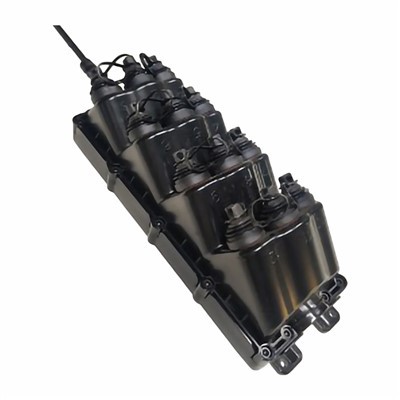
Don’t get me wrong – FTTA is still the future of aviation connectivity. It can support 5G, high-speed in-flight Wi-Fi, even live streaming from aircraft cameras that can feed into air traffic control. The speed is way faster than copper, it’s immune to EMI, and it’s way easier to run through the tight spaces in modern planes. But every one of the challenges I just mentioned is something we’ve faced head-on, and they’re not going away anytime soon. We’re not just a supplier – we’re problem-solvers, so we’re working on lightweight connectors that hit the weight mark, training modules that cut down on the learning curve, and modular kits that make repairs faster. But at the end of the day, it’s a partnership. Airlines, regulators, and suppliers like us all have to work together to fix these kinks.
Fused Fiber Coupler If you’re an airline maintenance manager, fleet ops lead, or anyone dealing with in-flight connectivity headaches, we’ve been through every single one of these challenges, and we’ve got solutions that actually work. We’re not here to sell you a one-size-fits-all kit – we’ll custom-design FTTA setup that fits your fleet, your budget, and your safety requirements. Feel free to reach out to our team to chat through your specific needs, no strings attached.
References
- Federal Aviation Administration. (2022). Aviation Fiber Optic Cable Certification Requirements. FAA Technical Report AC 25.820(b)-12.
- European Union Aviation Safety Agency. (2023). EASA Certification Specification for Fiber Optic Systems in Aircraft. EASA CS-25 Amendment 18.
- International Air Transport Association. (2024). Fuel Efficiency Benchmarks for Commercial Aircraft. IATA Economic Briefing 2403.
- SAE International. (2022). Vibration Testing Standards for Aircraft Wiring Systems. SAE AS8049 Revision D.
- Aerospace Industries Association. (2023). Maintenance Training Best Practices for Avionics Modernization. AIA Tech Paper 23-07.
Brolink Technologies (Dongguan) Co., Ltd.
As one of the most experienced ftta manufacturers and suppliers in China, we offer a wide range of products with superior quality. We warmly welcome you to buy high-grade ftta in stock here and get quotation from our factory. For price consultation, contact us.
Address: Room 201, Unit 2, Building 16, 77 Dongguan Science And Technology Park, Shilong Road, Guanlong Road, Dongcheng District,Guangdong province,China
E-mail: scwang@brolinktech.com
WebSite: https://www.brolinkopt.com/
