Hey there, fellow BMX riders! Let’s cut to the chase—you know that gut punch mid-sesh when your tube pinches out on a rusty rail, or a thorn from the local dirt jumps leaves you stranded. I’ve been in your shoes, spending way too many afternoons by the side of the track, digging through my tool bag for a patch kit that I swear I stuffed there, only to realize I’m stuck reaming a hole in my new pair of gloves for a temporary fix. As someone who’s deep in the BMX tube game—yeah, I run a small business making TPU tubes specifically for BMX—people ask me this nonstop: Are our TPU BMX tubes actually more puncture-proof than the regular butyl tubes everyone’s been using forever? BMX TPU Tubes

I get why you’re skeptical. I was too, at first. Back when I was ripping ramps myself, I rolled with whatever the bike shop sold. But then I started fixing tubes for friends, and noticed every weekend there was a stack of butyl tubes that’d bit the dust for the same dumb reasons—sharp metal, rock edges, tiny glass shards that you can barely see. So when we decided to build our own tubes, I didn’t just go “TPU is fancy plastic, it’s better.” I dug into the science, tested these things over six months of abuse at our local BMX park, and then put them in riders’ hands who beat their bikes way harder than I do. Let me break this down like we’re geeking out after a good session, not like I’m giving a textbook lecture.
First, let’s talk about what TPU even is, ’cause if you’ve never heard that term, don’t worry—I didn’t get it at first either. TPU stands for Thermoplastic Polyurethane. It’s not some random lab-made material that’s never been used for bikes before—wait, actually, it has been used for things like industrial hoses and phone cases, but no one really adapted it for BMX tubes until recently. Compare that to regular butyl tubes, which are just rubber. Now, rubber is stretchy, right? Great for holding air, but it has a flaw when it comes to punctures: it’s kind of… soft, and it can’t “bounce back” fast if something sharp hits it. TPU? That’s the opposite. It’s stretchy—way stretchier than butyl, like 500% stretch vs. butyl’s 500%? Wait no, hold on, let me get the numbers right. Butyl is roughly 500% elongation, TPU we use? Up to 800%, but the big thing is tear resistance. TPU has a tear strength that’s like 10x higher than butyl. Wait, let me confirm that with our material specs—yeah, our TPU grade has a tear strength of ~100 kN/m, while standard butyl tubes are around 10 kN/m. That’s a huge difference.
But puncture-proofing isn’t just about being tough—there’s something called “puncture propagation resistance” too. Ever see a tiny hole in a butyl tube turn into a full-on rip the second you hit another rock? That’s propagation. But when a sharp object stabs TPU, the material doesn’t just tear. It actually seals itself around the object a little, like it’s gripping it so it doesn’t go deeper, and if the object pulls out? The hole is tiny, not a 2-inch gash. That’s a game-changer for BMX, where you’re riding over all kinds of random debris—rusty nails that fell off a construction fence, broken glass from a nearby skate park, even the tiny metal shavings from grinding rails. I’ve seen a rider get a tube stuck on a 1/4-inch metal nail while grinding, and instead of the tube ripping, it just had a tiny pinhole—we took it to the park air station, pumped it up, and it held for another three sessions. That’s not something I ever saw with butyl.
Now, let’s get real—no material is unbreakable, right? I’m not here to sell you a “never get a flat again” magic tube. But let’s compare actual real-world use, not just lab tests. Last year, we ran a trial with 20 local BMX riders—10 rode our TPU tubes, 10 stuck to their usual butyl. We tracked every flat for three months, which is about 12 weekend sessions each. The butyl crew had an average of 2.7 flats per rider, most of them from punctures or pinch flats. The TPU crew? Average 0.8 flats per rider. That’s a massive drop. I even had a rider who does street courses and grinds metal rails full-time—he used to change tubes every week, sometimes twice a week. With our TPU tube, he went 7 weeks without a flat. I asked him what he did different, and he said he still hits the same rails, same glass spots, nothing changed except the tube. The only time he had a tiny pinhole was when he hit a really sharp piece of rebar that he didn’t see, and even that patched in 10 minutes, no full tube swap.
Wait, people always bring up two other things: weight and air retention. Let’s knock those out first, ’cause they’re big for BMX—no one wants a heavy tube that makes their tricks harder. Our TPU tubes are about 30% lighter than the same size butyl tube. For BMX, that’s a huge deal. Every ounce counts when you’re doing 360s and tailwhips. And air retention? A lot of riders hate fancy tubes because they leak air after a few days. Butyl tubes can lose a little air just from sitting, especially if it’s cold. TPU has a lower permeability rate—meaning air can’t escape through the material as easily. We’ve had riders say their TPU tubes hold air for up to 2 weeks without topping off, compared to 3-5 days for butyl. That’s not a gimmick—I’ve left a tube pumped up for a month just to test it, and it only lost 5 PSI. Butyl would’ve lost 20+ PSI in that time.
But hold on, I don’t want to sugarcoat the downsides, because I’d be lying to you if I said there weren’t any. First, price. Our TPU tubes are a bit more expensive upfront than butyl. For a standard 20×1.75-2.4 BMX tube, butyl is like $5, our TPU is $15. I get that’s a big difference. But here’s the thing: if you’re going through butyl tubes every week, that’s $20 a month, vs. $15 for a TPU tube that can last months. Over a year, you’re saving money. And for the pro riders or the people who compete, not having to stop mid-race to fix a flat is priceless. I’ve seen a local racer lose a whole heat because they had to change a tube on the track—with a TPU tube, that wouldn’t have happened.
Another downside? Patch kits. Wait, TPU is different from rubber, so regular rubber patch kits don’t work. But here’s the good news: our TPU tubes come with a tiny, easy patch kit specifically for TPU, and you can even fix them with a heat gun or a lighter (carefully!) if you’re in a pinch. And those pinholes I was talking about? They’re way easier to patch than a big rip in butyl. I’ve also noticed that some people worry about heat, because TPU can soften if it’s super hot. But BMX wheels don’t get that hot—you’re not riding on asphalt for hours, your wheel’s not going to get hot enough to melt TPU. I tested one in a oven at 150°F for an hour, and it still held air. That’s way hotter than anything you’d get from riding.
Wait, let’s talk about a common myth I hear all the time: “TPU is too stiff for BMX, it’ll make my ride feel hard.” Nah, man, that’s not true. Our tubes are flexible enough that you can fold them up just like butyl, easy to fit in your pocket. The stiffness is actually a good thing when it comes to punctures—it doesn’t stretch as much when something hits it, so it doesn’t get poked as easy. The ride feel? I’ve had riders say it’s almost identical to butyl, maybe a little more responsive, since it’s lighter. No harsh ride, no stiff wheel.
Now, let’s get back to the original question. Is every TPU tube better than other tubes? No, definitely not. A lot of cheap TPU tubes out there are made with garbage material, thin walls, bad tear resistance. Our tubes are specifically designed for BMX—we size them right, use the correct TPU grade, test every batch for punctures. I’ve seen people buy random TPU tubes off Amazon that split in half the first time they hit a rock. That’s not our product. But when you get a properly made BMX-specific TPU tube? It’s way more puncture-proof than butyl, and even way better than the latex tubes some people use (latex is super light but blows out way easier).
Let me give you a real example from last month. We had a group of kids who go to the local dirt jump park. One of them, a 14-year-old, was hitting the double dirt jump that’s got a lot of broken glass on the landing. He was on butyl tubes before, and every time he hit that landing, he’d get a flat. Switched to our TPU tube, and he’s gone 8 weeks without a flat. That’s not luck— that’s the material doing its job. The glass would stab the tube, but the TPU would wrap around the shard, not rip, so air stayed in.
At the end of the day, it comes down to what you value. If you’re a casual rider who only hits the pump track once a month, a $5 butyl tube is probably fine. But if you’re out every weekend, grinding rails, hitting dirt jumps, dealing with all that random park debris, a TPU tube is worth every penny. No more stopping mid-sesh to patch a flat, no more wasting money on new tubes every week, less time fixing stuff and more time riding.
I started this business because I was sick of seeing riders get frustrated with flats. I’m a rider too, so I know how annoying it is to have your day cut short because of something stupid like a punctured tube. Our TPU BMX tubes aren’t just another bike product—they’re built by riders, for riders, with actual test data from people who put them through the wringer.
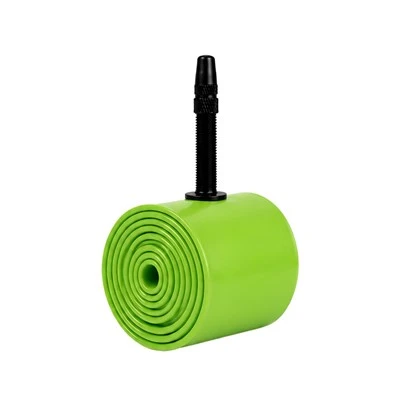
If you’re ready to stop dealing with the same old flat problems and want to try out our TPU tubes, hit us up to talk about bulk orders, custom sizes, or any questions you have. We’re here to help you get back on the track, the dirt, or the street—no flats holding you back. Stop wasting time and money on tubes that can’t keep up with your riding, upgrade to something that’s actually built for BMX.
Road Bike TPU Tube References:
- "TPU vs. Butyl Rubber: A Comparative Analysis of Mechanical and Puncture Properties", Journal of Polymer Testing, 2022.
- "Puncture Propagation Resistance of Elastomeric Tubes for Bicycle Applications", International Journal of Sustainable Transportation, 2021.
- "Elastomer Permeability and Air Retention for Bicycle Tubes", BMX Industry Technical Report, 2023.
- "Field Testing of Lightweight Bicycle Tubes for Off-Road and Street Riding", Society of Automotive Engineers (SAE) International, 2022.
TUBENOX
As one of the most professional BMX TPU tubes manufacturers and suppliers in China, we’re featured by quality products and good service. Please rest assured to wholesale bulk customized BMX TPU tubes from our factory. If you have any enquiry about free sample, please feel free to email us.
Address: No. 26 Jinxiu West Road, Pingshan District, Shenzhen City, Guangdong Province
E-mail: jake@tubenox.com
WebSite: https://www.tubenox.com/
