Accelerometers are versatile and essential test equipment widely used across various industries due to their ability to measure the acceleration of an object. As a prominent test equipment supplier, I have witnessed firsthand the diverse and ever – expanding applications of accelerometers in different fields. In this blog, I will delve into the detailed applications of accelerometers as test equipment. Test Equipment
1. Automotive Industry
The automotive sector is one of the major users of accelerometers. These devices play a crucial role in safety and performance testing. In terms of safety, accelerometers are integral components of airbag systems. Before the airbag is deployed, accelerometers continuously monitor the vehicle’s acceleration. When a sudden deceleration, such as in a collision, is detected, the accelerometer sends a signal to the airbag control unit. The control unit then triggers the inflation of the airbag within milliseconds, protecting the vehicle occupants from severe impact.
For performance testing, accelerometers are used to measure a car’s acceleration, braking force, and cornering forces. Engineers can assess the vehicle’s dynamic characteristics, such as its 0 – 60 mph acceleration time accurately. By analyzing the data from accelerometers installed on different parts of the vehicle, they can also optimize the suspension system. For example, if the accelerometer data shows excessive vibrations during a bumpy ride, the engineers can adjust the shock absorbers to improve the ride comfort and handling of the vehicle.
In addition, automotive manufacturers use accelerometers for vehicle stability control (VSC) systems. These systems detect any unexpected changes in the vehicle’s movement, such as over – steering or under – steering. The accelerometers measure the lateral and longitudinal acceleration of the vehicle, allowing the VSC system to apply brakes selectively to individual wheels and adjust engine power to keep the vehicle on the intended path, thereby enhancing driving safety.
2. Aerospace and Aviation
In the aerospace and aviation industry, accelerometers are of utmost importance. During aircraft design and testing, accelerometers are used to measure the vibrations and accelerations experienced by the aircraft structure. This helps engineers to understand the structural integrity of the aircraft. For example, during take – off, landing, and flight maneuvers, the aircraft is subject to various forces. Accelerometers can detect abnormal vibrations that may indicate structural fatigue or damage in the wings, fuselage, or other critical components. By constantly monitoring these vibrations, maintenance teams can schedule timely repairs and inspections, ensuring the safety of the aircraft.
Accelerometers are also used in inertial navigation systems (INS) of aircraft. INS is a self – contained navigation system that uses accelerometers and gyroscopes to determine the position, orientation, and velocity of the aircraft. The accelerometers measure the linear accelerations in three axes (forward – backward, left – right, and up – down). By integrating the acceleration data over time, the INS can calculate the velocity and displacement of the aircraft. This allows the aircraft to navigate accurately even when other navigation aids, such as GPS, are unavailable or unreliable.
3. Consumer Electronics
Consumer electronics are another area where accelerometers have found widespread use. In smartphones, accelerometers enable features such as screen rotation. When the user tilts the phone, the accelerometer detects the change in orientation and automatically rotates the screen from portrait to landscape mode or vice versa. This provides a more convenient and user – friendly experience for viewing photos, videos, and web pages.
Accelerometers are also used in fitness trackers and smartwatches. They can measure the user’s physical activity, such as steps taken, distance traveled, and calories burned. By analyzing the acceleration patterns of the user’s movements, the device can accurately track the intensity and duration of the exercise. For example, a high – amplitude acceleration may indicate running, while a more gentle, rhythmic acceleration may correspond to walking. This data can be used by users to monitor their fitness progress and set personal goals.
In gaming consoles, accelerometers are used to enhance the gaming experience. For example, in some motion – controlled games, the player can use a handheld controller with an accelerometer. By moving the controller in different directions, the player can control the on – screen actions in the game. The accelerometer detects the movement of the controller and translates it into corresponding game movements, providing a more immersive and interactive gaming experience.
4. Industrial Machinery
In the industrial environment, accelerometers are used for condition monitoring of machinery. Many industrial machines, such as motors, pumps, and compressors, operate continuously. Over time, these machines are subject to wear and tear, which can lead to mechanical failures. Accelerometers can be installed on the machine components to monitor the vibrations. Normal operation of the machine produces a characteristic vibration pattern. Any deviation from this pattern, such as an increase in vibration amplitude or a change in frequency, may indicate a problem, such as unbalance, misalignment, or bearing wear.
By analyzing the vibration data from the accelerometers, maintenance personnel can detect the early signs of equipment failure. They can then schedule preventive maintenance before a major breakdown occurs, reducing downtime and maintenance costs. For example, if an accelerometer on a motor detects abnormal vibrations, it could be a sign that a bearing is starting to fail. The maintenance team can then replace the bearing before it seizes up, which could cause significant damage to the motor and disrupt the production process.
5. Structural Engineering
In structural engineering, accelerometers are used to monitor the health of buildings, bridges, and other large structures. These structures are subject to various external forces, such as wind, earthquakes, and traffic loads. Accelerometers can be installed at different locations on the structure to measure the vibrations caused by these forces.
During an earthquake, accelerometers can record the ground motion and the response of the structure. This data is crucial for understanding how the structure behaves under seismic loads and can be used to improve the design of future structures. For existing structures, continuous monitoring with accelerometers can help in detecting any damage or weakening of the structure over time. If abnormal vibrations are detected, engineers can assess the structural integrity and take appropriate measures, such as reinforcement or repair.
In addition, for tall buildings, accelerometers can be used to monitor the effects of wind. High – rise buildings are often subject to strong winds, which can cause them to sway. By measuring the acceleration and displacement of the building due to wind, engineers can design appropriate damping systems to reduce the sway and ensure the comfort and safety of the building occupants.
6. Robotics
In the field of robotics, accelerometers are used for motion control and navigation. Robots need to be able to move precisely and adapt to different environments. Accelerometers can provide information about the robot’s acceleration and orientation, which is essential for controlling its movement.
For example, in a mobile robot, the accelerometer can detect the acceleration and deceleration of the robot as it moves forward, backward, or turns. This information can be used by the robot’s control system to adjust its speed and trajectory. In addition, when the robot is climbing stairs or moving on uneven surfaces, the accelerometer can sense the changes in orientation and acceleration, allowing the robot to adjust its legs or wheels to maintain balance.
In robotic arms, accelerometers can be used to measure the movement and force exerted by the arm. This helps in precise positioning of the end – effector and in controlling the force applied during tasks such as grasping and manipulating objects.
Conclusion
As a test equipment supplier, I am well – aware of the wide – ranging applications of accelerometers in different industries. From ensuring the safety of vehicles and aircraft to enhancing the user experience in consumer electronics, accelerometers are indispensable tools. Their ability to accurately measure acceleration and vibrations makes them valuable for performance testing, condition monitoring, and navigation in various fields.
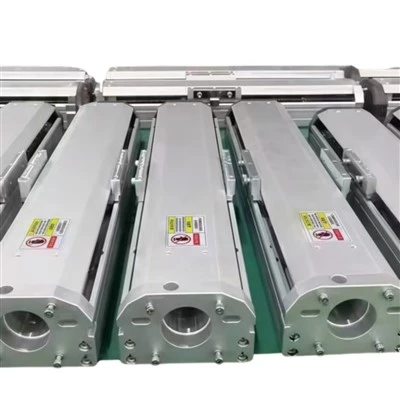
Ball Screw Linear Modules If you are in need of high – quality accelerometers for your testing requirements, whether it is for automotive, aerospace, consumer electronics, industrial machinery, structural engineering, or robotics, I invite you to contact me for a detailed discussion. We offer a wide range of accelerometers with different specifications and features to meet your specific needs. Our team of experts is ready to provide you with professional advice and support throughout the procurement process.
References
- Doebelin, E. O. (2003). Measurement Systems: Application and Design. McGraw – Hill.
- Norton, H. N. (2006). Handbook of Transducers. Elsevier.
- Tse, P. W. (2010). Vibration of Continuous Systems. Wiley.
Yangning (Xiamen) Intelligent Technology Co., Ltd.
With abundant experience, we are one of the most professional test equipment manufacturers in China. As we have world-leading production equipment and strong manufacturing capabilities, we warmly welcome you to buy bulk advanced test equipment from our factory. Customized orders are welcome.
Address: Room 307-2, No. 15 Duiying Road, Software Park Phase III, Torch Hi-Tech Zone, Xiamen, Fujian, China
E-mail: mia@ynautos.com
WebSite: https://www.ynautos.com/
